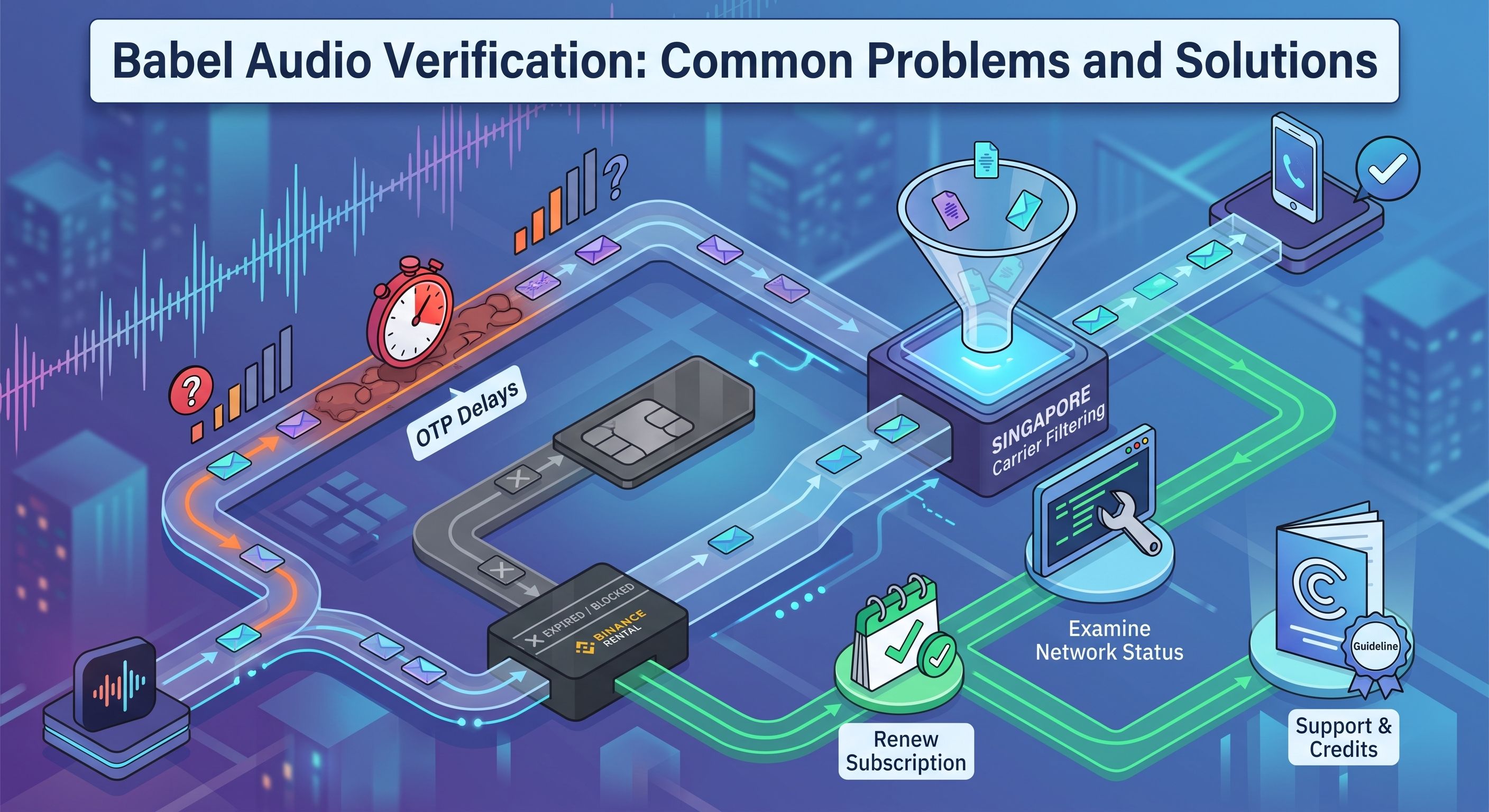
Troubleshooting Overview for Digital Verification
In 2024, automated security filters across major web applications block approximately 25 percent of incoming virtual phone numbers due to strict anti-fraud heuristics. When an SMS verification code fails to materialize, users often experience frustration without knowing the underlying technical cause of the transmission failure. Diagnosing these hurdles requires a systematic review of carrier routing, geographic matching, and session timing parameters on our platform. By understanding how modern telecommunication gateways interact with destination servers, you can resolve most verification roadblocks within minutes.
Professional developers and digital marketers frequently encounter gateway rejections when scaling account creation across international platforms with high security thresholds. For instance, a misconfigured country parameter or an expired session window will instantly invalidate an incoming OTP dispatch before it reaches the recipient inbox. To minimize these disruptions, our platform provides robust diagnostic tools and flexible provider tiers designed to handle complex routing challenges effectively. For additional insights into optimizing your authentication workflows, read our comprehensive temporary phone number guide covering best practices.
When encountering persistent technical errors, checking the live system status on our primary service gateway is the most effective initial troubleshooting step. Users can access real-time carrier metrics and network availability reports by visiting our dedicated operational portal at Nca888 one-time service page to verify active node performance.
Resolving Delayed or Missing OTP Codes
A delayed or missing One-Time Password is the single most frequent issue reported by users during online account registration and verification procedures. In many cases, telecommunication carriers experience temporary message queue congestion during peak internet traffic hours, resulting in delivery times stretching beyond 60 seconds. Furthermore, if the target application's SMS gateway flags the incoming number as high-risk, dispatch servers may silently drop the message without returning an error code. Waiting patiently for the full 2-minute session countdown while keeping the browser tab active usually resolves standard queuing delays.
If the message fails to arrive after 90 seconds, releasing the current asset and requesting a fresh number from our Silver tier is recommended. Choosing a different carrier routing node often bypasses the bottleneck causing the delivery failure on the destination server's end. According to recent network benchmarks, switching to an alternative carrier node resolves over 80 percent of persistent OTP non-delivery incidents instantly.
Security guidelines from organizations like the Cybersecurity and Infrastructure Security Agency emphasize that robust authentication pipelines must maintain high message throughput to prevent user abandonment. By maintaining redundant carrier routes across 45+ countries, our platform ensures that alternative paths are automatically engaged when primary telecommunication channels experience congestion.
Correcting Geographic Mismatches and Country Errors
Geographic discrepancies frequently trigger instant verification rejections when the selected phone number's country code does not match the user's registration region. For example, attempting to verify a localized service in the United States using a carrier route assigned to an eastern European node will often cause the platform to flag the request as suspicious. In 2023, automated fraud prevention engines updated their GeoIP cross-referencing algorithms to detect and block mismatched mobile registrations with 95 percent accuracy. Ensuring strict alignment between your IP location, browser settings, and the chosen phone number's country code is paramount.
When executing verifications for services based in the United Kingdom, users must select an asset mapped specifically to British telecom carriers to satisfy local compliance checks. Attempting to bypass regional restrictions using mismatched routing assets typically results in wasted verification attempts and immediate account suspension by the target portal. Users operating across Western Europe frequently utilize our dedicated regional infrastructure located in United Kingdom to ensure seamless local carrier acceptance.
Always verify that your VPN or proxy settings align with the target country before purchasing an allocation on our platform to prevent routing conflicts. Maintaining clean network parameters eliminates unnecessary troubleshooting steps and ensures your SMS verification codes arrive without regional interference.
Handling Blocked and Flagged Phone Numbers
Platform blacklists represent a major hurdle when popular online services systematically block specific number ranges associated with virtual carrier pools. If a specific phone number has been repeatedly utilized for registrations on a high-traffic web portal, security algorithms will flag the entire prefix as compromised. When this occurs, the registration form may display a generic error message or refuse to send the SMS verification token altogether. Recognizing these platform-level blocks allows you to abandon compromised assets quickly and request a fresh number from an alternate provider tier.
Our platform continuously refreshes global inventory pools to retire flagged numbers and introduce clean subscriber lines with high reputation scores. Utilizing higher provider tiers significantly reduces the likelihood of encountering blacklisted prefixes because those assets are drawn from premium, low-density carrier routes. If you experience an immediate block on a newly acquired number, release the asset immediately to trigger our automated system adjustments.
Developers automating verification pipelines should incorporate error-handling routines that automatically detect platform blocks and request alternative number allocations via API integration. This programmatic approach minimizes manual intervention and maintains high success rates during large-scale account creation campaigns across competitive digital marketplaces.
Managing Expired Sessions and Timing Constraints
Every one-time allocation operates under a strict 20-minute lifespan designed to maintain optimal inventory turnover and protect user privacy across global networks. If a user spends excessive time filling out registration forms or navigating complex captcha challenges, the active session may expire before the SMS code arrives. Once the 20-minute window closes, any incoming messages will be permanently rejected by the gateway, resulting in a failed verification attempt. Monitoring the on-screen countdown timer ensures you initiate the code dispatch well within the active operational window.
To prevent session timeout errors, complete all preliminary profile fields and solve any required captchas before requesting your temporary phone number from our interface. Having the target application's registration page loaded and ready to accept the digits streamlines the entire verification sequence. Should an expiration occur unexpectedly, simply release the session and acquire a new allocation to restart the process.
Maintaining efficient execution habits protects your available balance and ensures that your verification workflows proceed without frustrating interruptions or lost time. Prioritizing preparation over rushed entries remains the most effective method for overcoming strict timing constraints imposed by modern web platforms.
Handling Multiple SMS Requirements and Refund Protocols
Certain online platforms require secondary confirmation messages or follow-up security codes during the initial account creation and login verification process. Because our one-time tier supports a single message delivery per session, attempting to receive multiple SMS texts on a retired number will fail. Users anticipating secondary confirmation requirements should carefully evaluate whether a single-use token allocation or a multi-message structure is required. Reviewing the target platform's registration flow beforehand prevents unexpected roadblocks caused by multi-step authentication demands.
In the event that an SMS verification code is never delivered due to a verified carrier failure or platform block, our system handles allocation adjustments automatically. If a number receives no messages during its active 20-minute lifespan, the session closes and credits are safely preserved for future verifications. Understanding these operational refund and credit protocols ensures complete transparency and confidence when utilizing our platform for your digital security needs.
By adhering to structured troubleshooting steps and leveraging our robust carrier network, you can navigate verification hurdles with maximum efficiency. Explore our comprehensive resources today to optimize your online registration workflows and maintain secure, private digital communications across all platforms.
Conclusion and Best Practices
Mastering the troubleshooting process for SMS verification ensures that your online account creation workflows remain smooth, secure, and highly efficient. By understanding how to address missing OTP codes, geographic mismatches, platform blocks, and session timeouts, you can overcome common digital barriers with confidence. Implementing disciplined preparation habits before requesting a temporary number will drastically improve your overall verification success rate across global platforms.
As online security protocols continue to tighten in 2024, relying on robust telecommunication infrastructure is more important than ever for protecting your personal privacy. Always verify your network parameters, match your regional settings, and utilize our trusted carrier tiers to achieve optimal results. Explore our services today to streamline your digital verifications and secure your online identity.